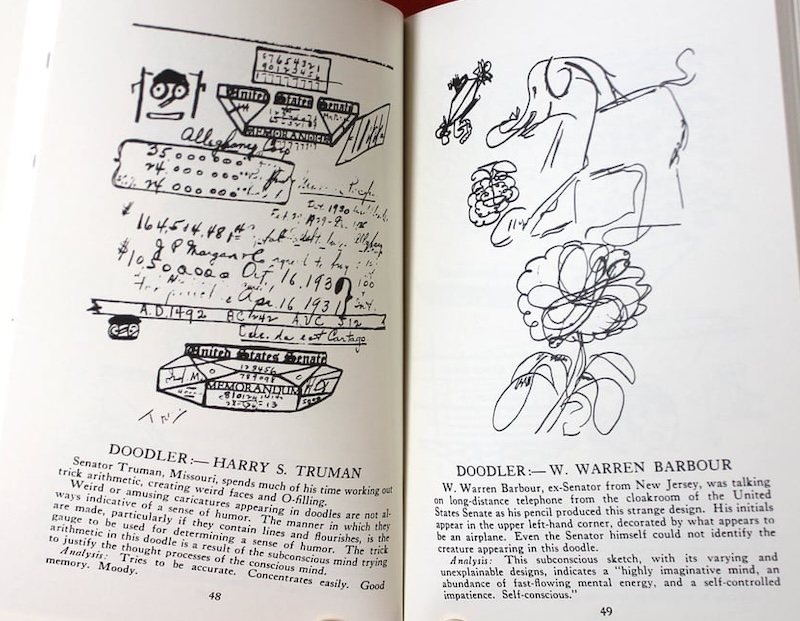
Until 1936, doodlers in 20th-century America were said to be “pixillated”… as in, under the spell of pixies (fairies). For some, doodlers’ illogical marks represented symptoms of either a spiritual trance or neurosis 😳 (Maclagan, 2014).
What changed in 1936? The film Mr. Deeds Goes to Town.

The film is about the sanity of radical altruism in the face of irrational greed. A kind, eccentric man (Mr. Deeds) inherits $20 million during the Great Depression, then gives it away to people in need.
Feeling threatened by Mr. Deeds’ generosity, wealthy NYC elites accuse him of being “pixillated” and attempt to have him declared legally insane.

Mr. Deeds defends his sanity in court by celebrating the irrational things he loves to do—including doodling.
“[Doodler] is a name we made up back home,” Mr. Deeds explains, “For people who make foolish designs on paper when they’re thinking. It’s called doodling. Almost everybody’s a doodler...People draw the most idiotic pictures when they’re thinking.“
In the end, the judge declares, “You are not only sane, but you’re the sanest man that ever walked into this courtroom!“

A year after the film’s release, Russell Arundel (1937) published the book Everyobody’s Pixillated: A Book of Doodles (above), featuring doodles by famous people (e.g., FDR, Mussolini, George Washington).
Doodling, according to Arundel, is rooted in the pixie-like enchantment (pixillation) that is our natural state as humans. That’s why young children are so naturally good at expressive doodling (scribbling), explains artist David Maclagan (2014) in his book about doodling.

“The doodle is subversive,” writes James Reath (2025), a modernist culture researcher. Thinking about this original agency of the doodle, Reath poses an inspiring question:
“In a time when democracy seems once more under threat, how might the doodle rekindle its long-lost power to inspire pixillated dreams of togetherness?”💥